Where Is a Pay-phone on Staten Island New York
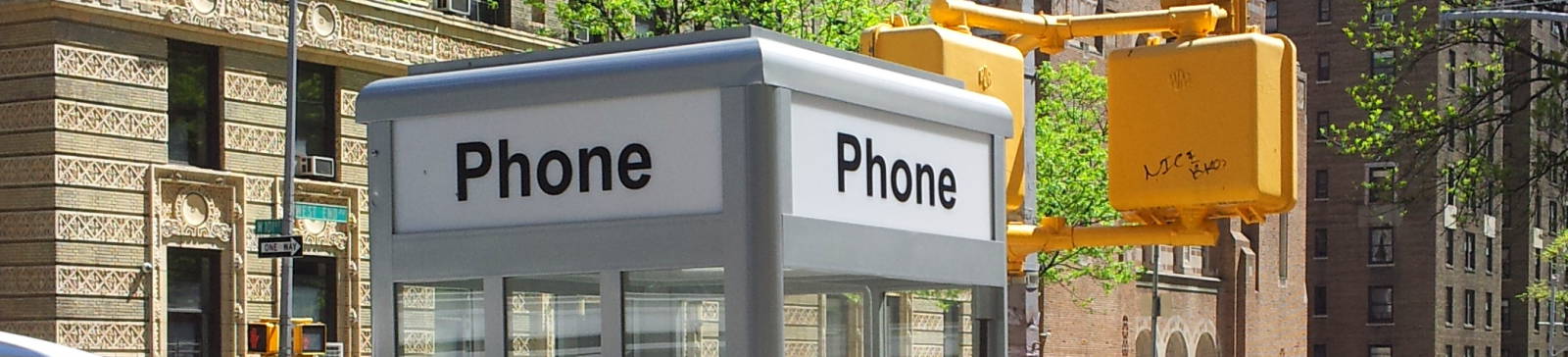
The Last Bran-new York Phone Booths
The Closing of Public Phone Booths
The coin-operated in the public eye pay phone is a dying breed.
Actually, it is more often than not dead already. The few remaining examples are being replaced. We can articulate that it is dying only when to the very limited extent it is non completely extinct already.
Who still needs a public pay phone, besides the person calling to report that their mobile phone was good damned or purloined?
By the outpouring of 2016 in that respect were only if four enclosed payphone booths left over in completely of Manhattan. Meanwhile their brethren in shells extending down but to shank level were being replaced with Internet data nodes that could do something as quaint as a vocalisation claim if you actually welcome to. Sound! O'er a wire! What hath God wrought?
The main purpose of these replacements was to allow for public Cyberspace access. A closing for searches and maps, plus modular USB connectors to charge personal phones or another devices, positive a WI-Fi Internet access point so people could connect to the Net A they walked down the sidewalk or sat in a nearby java grass or apartment.
Here are the last four full-height "Superman-style" phone booths in Manhattan, and a couple of of their almost as archaic sidewalk brethren as they started to be pulled forbidden and replaced with the fres LinkNYC system.
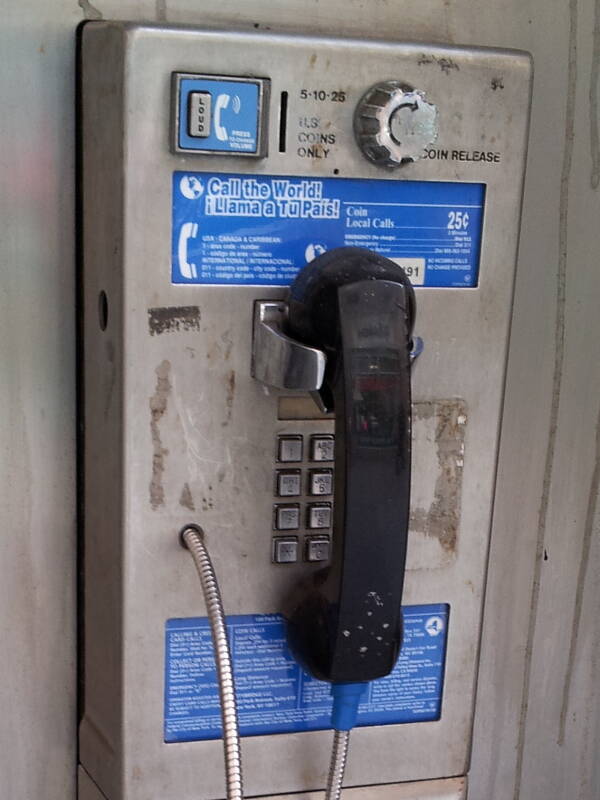
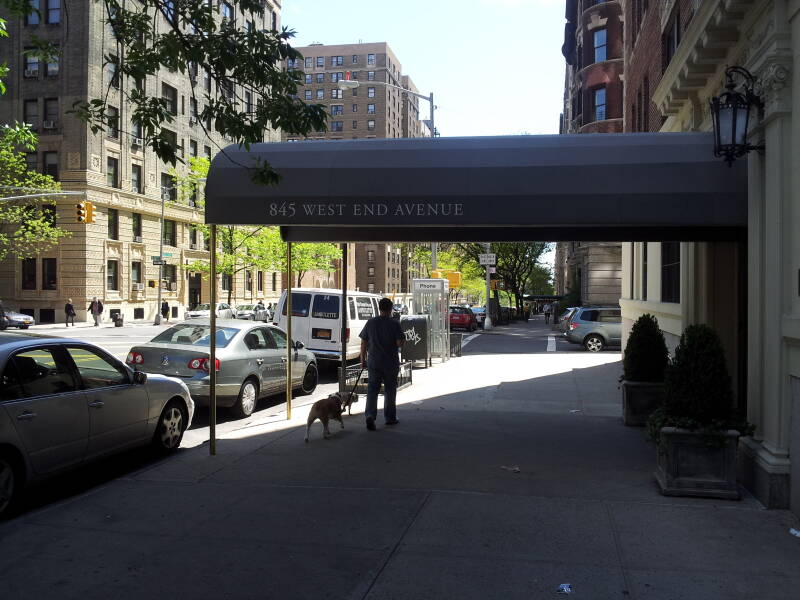
The last four brimming-Booth pay phones in Manhattan were along Westbound End Avenue on the Upper West Side, at 66th,, 90th, 100th, and 101st Streets. I'm walking southeastward on West Oddment, approaching the northernmost one. See it ahead on the next corner?
A plan was announced in November, 2014 to replace all public telephone set booths with a system combining a Wi-Fi hotspot, free of Internet access, free municipal calls with a cellphone or intrinsic keypad (through a partnership with Vonage), access to city services and directions, and a USB charging place for mobile devices. A red clit provides a simple way to contact 911 in the vitrine of emergencies. The system will be funded by advertising panels happening two sides of to each one unit. It is expected to render at least $500 million in revenue for the city over the commencement 12 years.
The system is LinkNYC, head for the hills past a consortium including Qualcomm and Titan. The WI-Fi range is to be about 50 meters supporting up to 250 connected devices.
In recent 2014 in that location were some 8,400 pay phones in the City. The project is hoped to set u astir 10,000 of these communicating kiosks or "Links", all about 9.5 feet in height and to a lesser degree a foot thick.
West End Avenue at West 101st Street
Let's continue to the northernmost booth, at 101st Street.
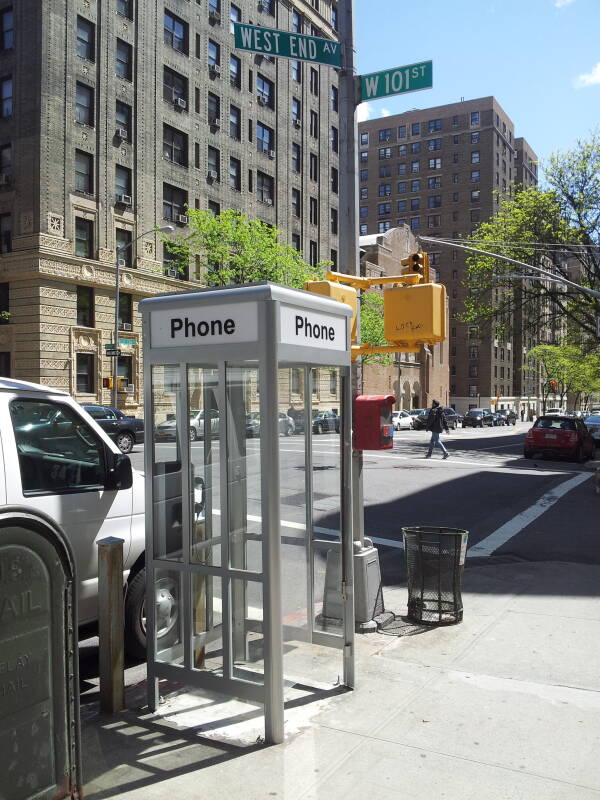
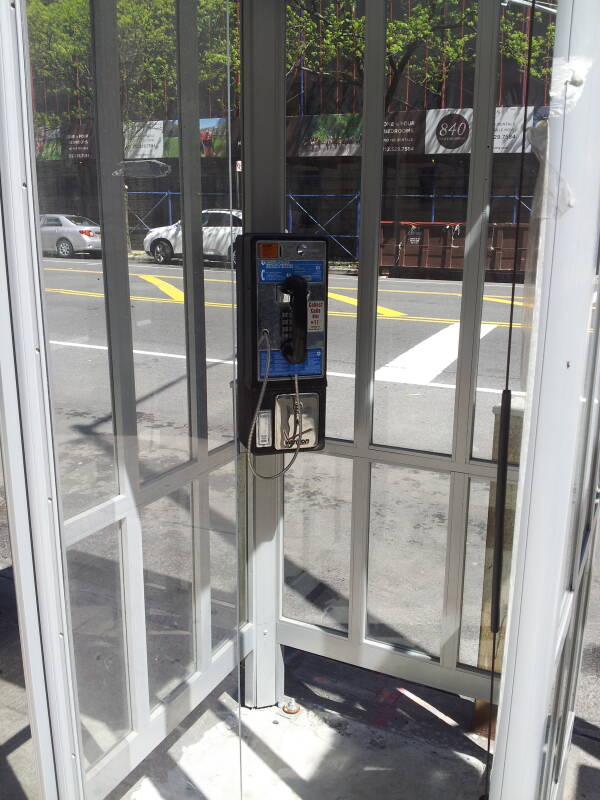
These last four surviving full pinnacle booths do have doors, although they'Re simple hinged plastic panels without frames. They're Plexiglass or Lexan sheets about 3/16" or 4.5–5 mm blockheaded, hinged to freely swing both in and out.
There's no metal frame studied to stay fresh the door panels rigid but frequently jumping out of its cut and jamming and making for extra struggle letting yourself in and away.
But it is a full tallness call box with doors, in which you can adhere to tradition by entering, pulling the doors shut, and urinating in a slight degree of privacy.
Erbium, making a earpiece call, that is. But have you ever smelled the inside of a traditional phone booth used in the traditional fashion? More than phone calls happened in there.
The large gap between the sidewalk and the bottoms of the panels and doors provides constant public discussion and makes it more utile when the city or the phone fellowship comes round with a high-blackjack hose to clean the booth.
West Destruction Avenue at West 100th Street
It's just a blockade to the next one, at 100th Street. Each of these is on the northwest corner of its intersection. Stan Lee's place of birth is more or less here, at West End Boulevard and 98th Street.
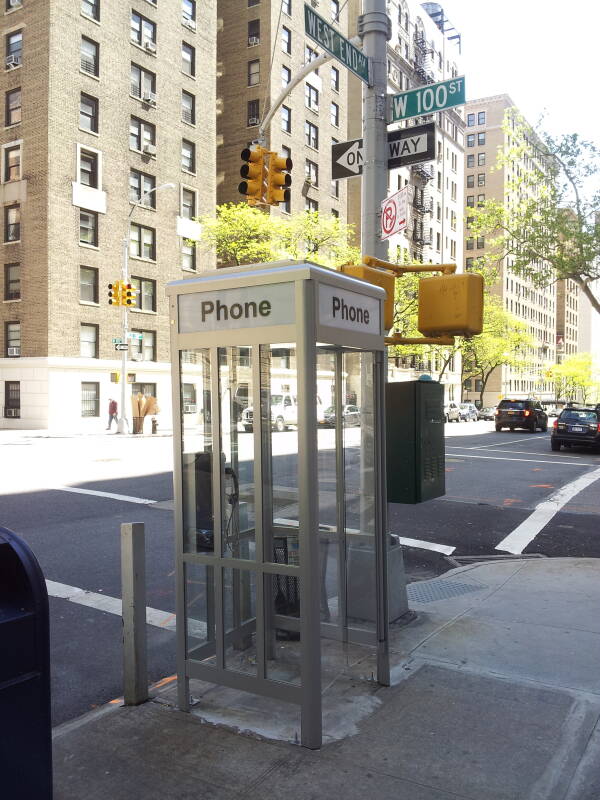
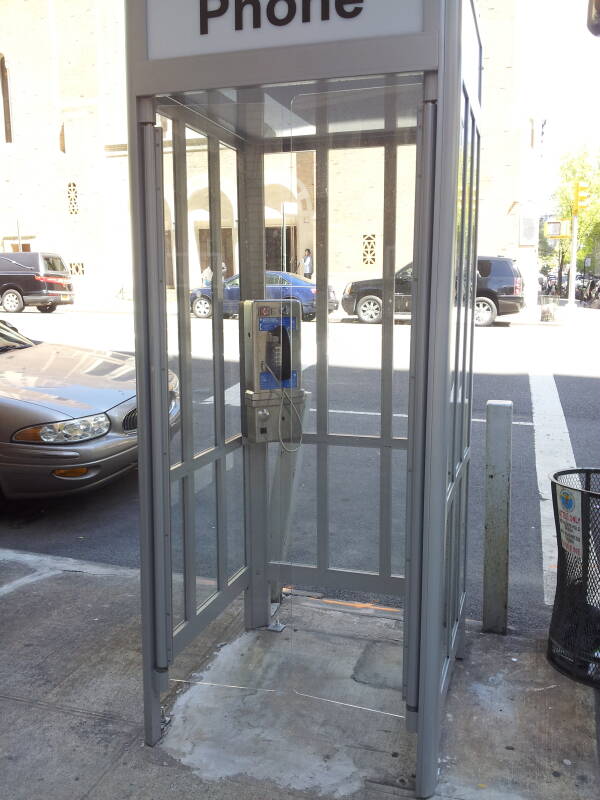
The work in February 2016 included replacing some battered older booths. This wasn't passing to be easy. In 2003, the City had needed to put back the booth at 100th Street. Verizon said that they had just two brimful-acme booths left, and they used both to rent out to film companies. One of those two replaced the booth at 100th Street, and they realized that the other had been destroyed spell filming the thriller Sound Booth. Even the movies evolve — Phone Booth is replaced by Cavitied.
Verizon contacted Clark Specialty in Bath, Unused York, a company that has manufactured and refurbished phone booths. Just Clark Specialty had sold the last of their stock all over 10 years before to military bases and collectors.
They eventually tracked down a warehouse in Canada with several phone booths in naughty condition. They bought quaternion of them, disassembled them, and replaced the transparent panels. The tracked doors were removed and replaced with the simple hinged panels.
The Rise and Dawdle of National Pay Phones
In the beginning there were pay back stations, company-owned phones you could use and past pay an attendant. The Connecticut Phone service is said to have had one of these in their New Haven office in 1880.
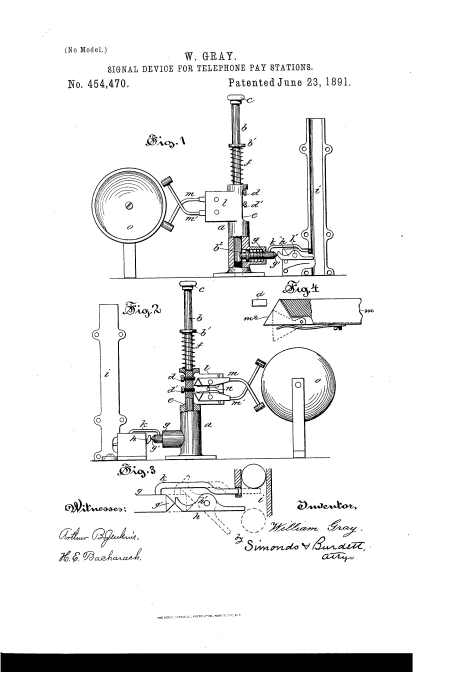
By 1889 the Hartford Bank, also in Connecticut, had a public phone with a mechanism to pay with coins. U.S. Patent 454,470 was issued for a coin pay mechanism that rang a bell for each strike deposited.
There were 81,000 pay phones in the U.S. away 1902. The first outdoor pay phone in a booth was installed in 1905. In that location were 25,000 of these booths in New House of York City by 1925.
Pay up phones kept multiplying. The Bell System installed number one million in 1960.
The peak? It depends on who you ask, the numbers are conflicting imputable the division of AT&T in the 1980s. Maybe 2.6 million in 1995, Oregon 2.2 million in 2000.
The FCC mandates a fee for calls located from a pay phone to a fee number. The proprietor of a fee bi must pay 49.5¢ for each call successfully placed from a pay phone. Many owners of toll-loos numbers pool reject attempted calls from pay phones. Arsenic for calling cards, virtually charge either $0.50–1.00 (or more) or a number of extra minutes up to (or larger than) that surcharge for each call ordered through a pay off telephone set.
Surcharges and filth made pay phones less attractive. Then mobile phones successful them irrelevant.
The salary phone numbers started descending speedily. AT&T officially stopped supporting the public pay phone system in 2009, and Verizon mostly quit in 2013. There were to a lesser degree 500,000 larboard by 2013.
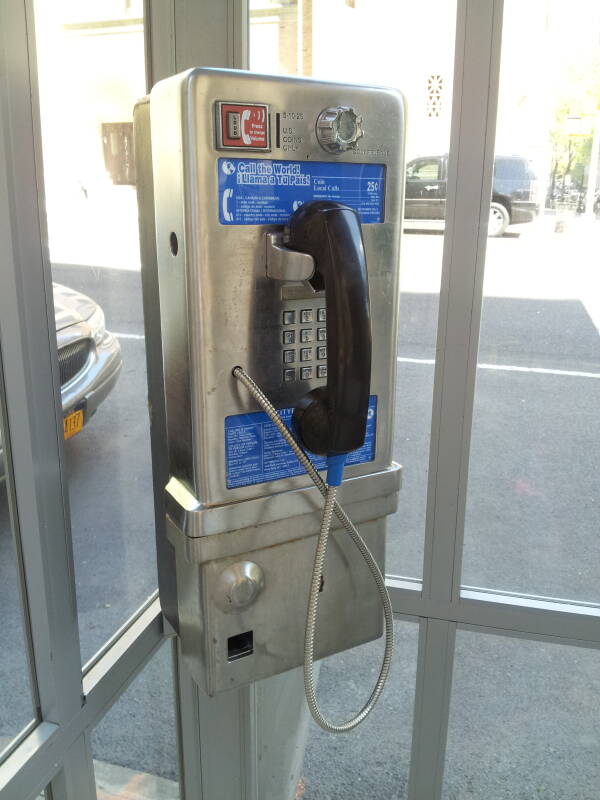
West End Avenue at West 90th Street
Now we'll continue south connected West End Boulevard to 90th Street.
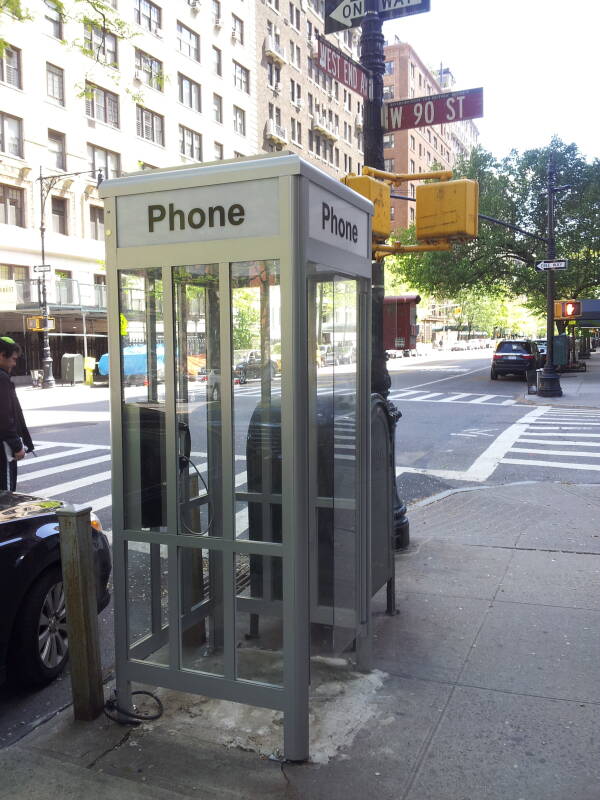
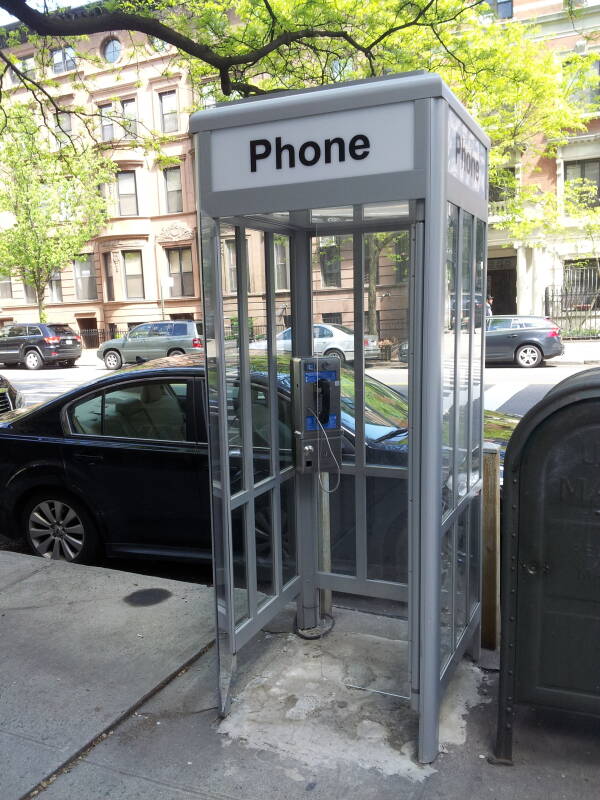
West End Avenue at West 66th Street
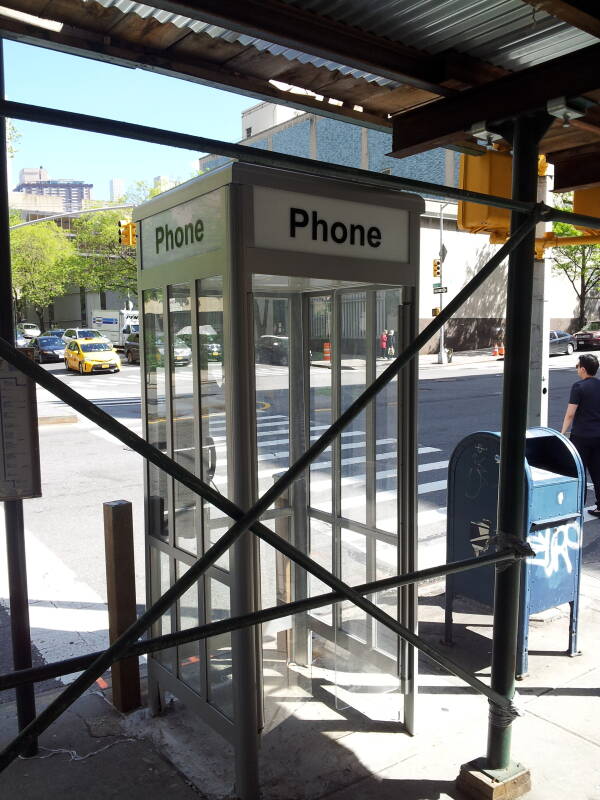
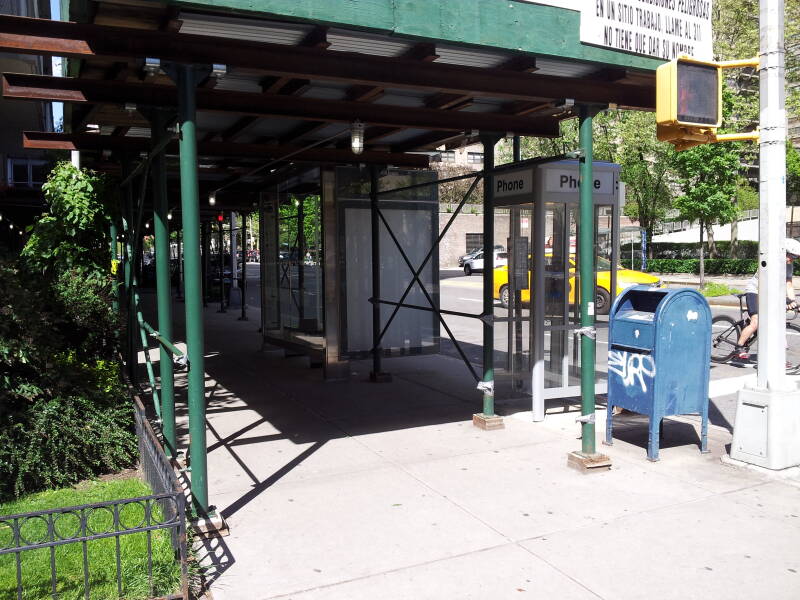
West End Avenue and 66th Street is behind the northwest corner of the President Lincoln Center complex. This is the southmost of the last four full-sizing booths.
Interior Telephone set Booths
The Dublin House bar is on 79th street, just east of Great White Way and the MTA station. It opened in the 1920s, during Inhibition. It has been officially operating as a pub since the vacat of Prohibition in 1933. Its neon sign over in the pattern of a harp is said to be the oldest atomic number 10 sign in the city.
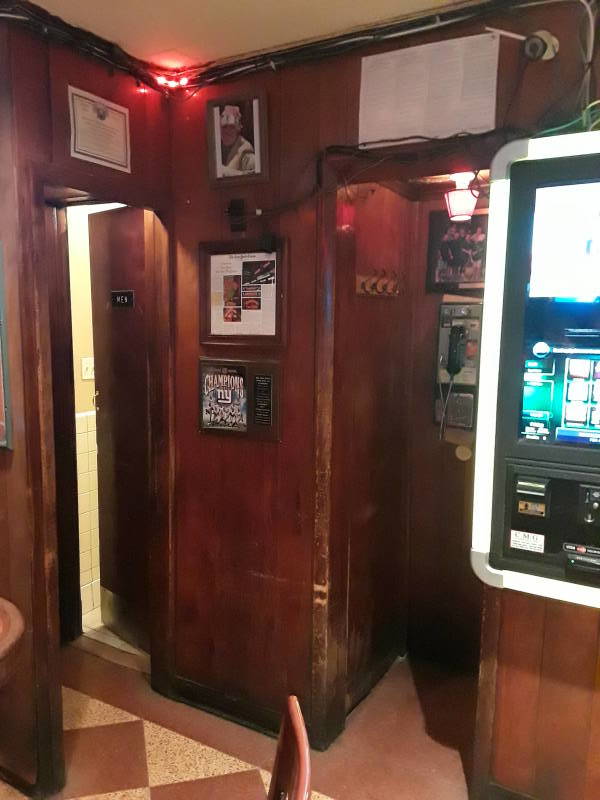
There was originally a eating place on the second deck, and the kitchen at the endorse of the third floor. A food elevator ran ahead and down. That space was converted into a phone booth at the bar level. Now it's mostly used for hanging coats and bags, because WHO needs a payphone?
Kiosk Earnings Phones
At a lower place are some examples in kiosks. The small incline panels support some advertising income, but they block nearly none background knowledge noise.
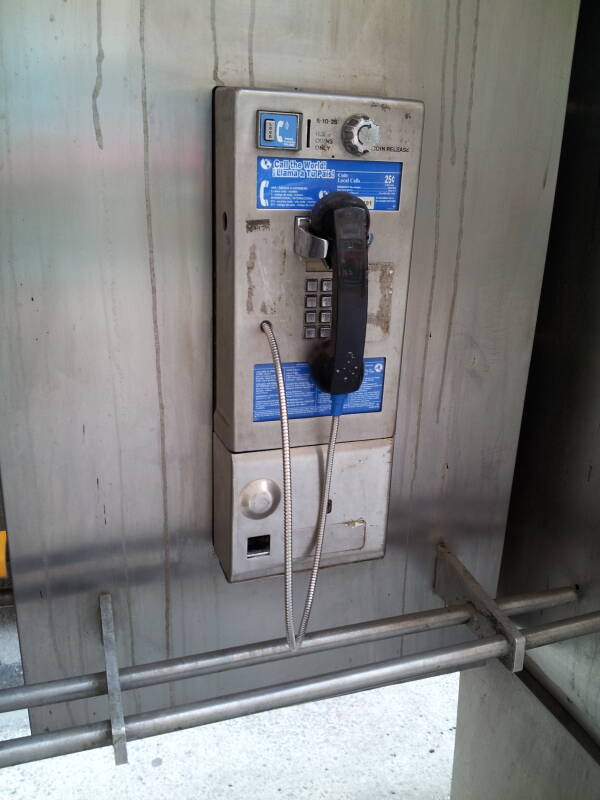
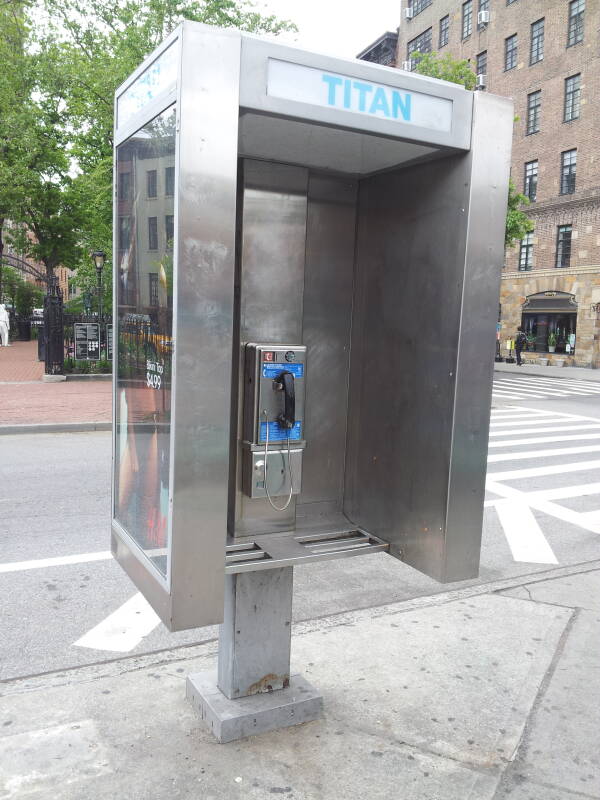
The phones shown so far had the time-honored square buttons. But the last one to a higher place appears at first to take over no buttons. Malicious mischief? No, it has small stick buttons, an attempt at a more long-wearing invention. See a closer view of one of these pin-button phones below.
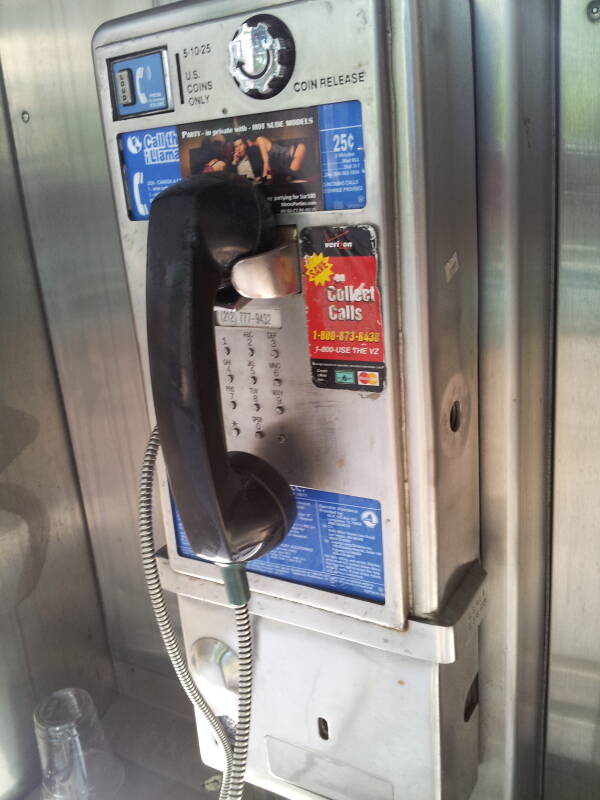
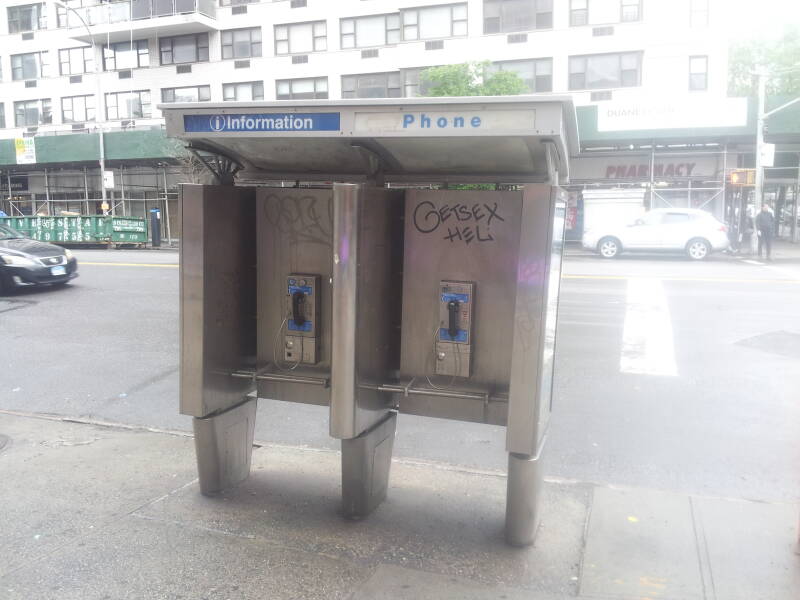
Now we rag the first of the LinkNYC panels. The one seen below is on 3rd Avenue just south of 14th Street. The LinkNYC project started here, moving north on 3rd Avenue from 14th Street. This was probably the first one installed.
LinkNYC
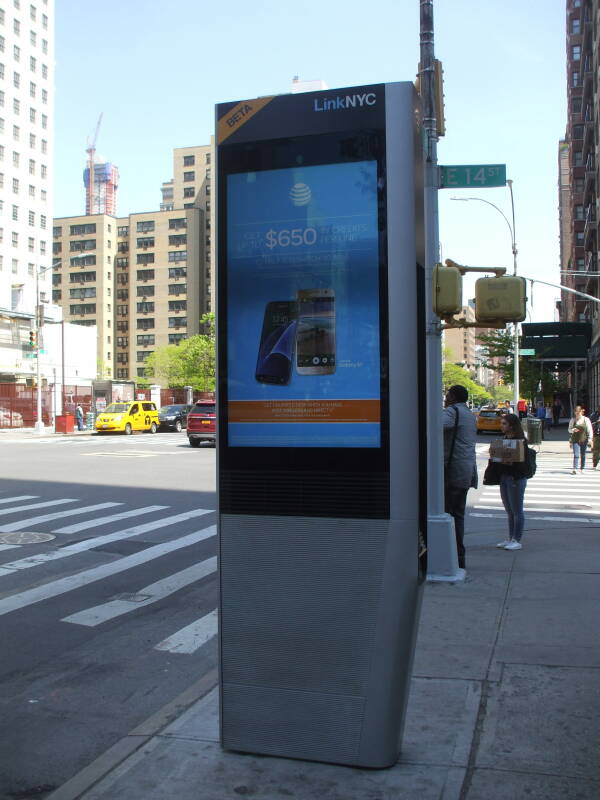
LinkNYC aims to be the largest and fastest public Wi-Fi network in the world. It started in Manhattan but will cover all five boroughs. The contract was awarded to the Citybridge consortium, made up of Qualcomm, Titan (who had been operating numerous, perhaps the majority, of the pay phones), Control Group, and Comark. In June 2015, Titan and Control group merged into Product, and was acquired by a group of investors led by Sidewalk Labs, the "urban innovation brass" of Alphabet Inc., the parent company of Google.
Wireless fidelity
networking
The kiosks, called Golf links, are fashioned to support encrypted Wi-Fi to a 50-meter rank. At least at first, encoding is sole supported with devices running Malus pumila's iOS. Indeed be detailed to use TLS and SSH. The Links use Qualcomm's Vive 802.11ac Wafture 2 4x4 chipsets.
IEEE 802.11ac operates on the 5 GHz band, 5.170–5.835 GHz. It provides multi-station WLAN throughput of at the least 1 gigabit per second, and unshared-device throughput of leastways 500 megabits per indorse. It accomplishes the high throughput through a wider RF bandwidth, 80 Megahertz for Stations and up to 160 MHz optionally, raised to eight MIMO spatial streams, and high schoo-throughput intonation up to 256-QAM.
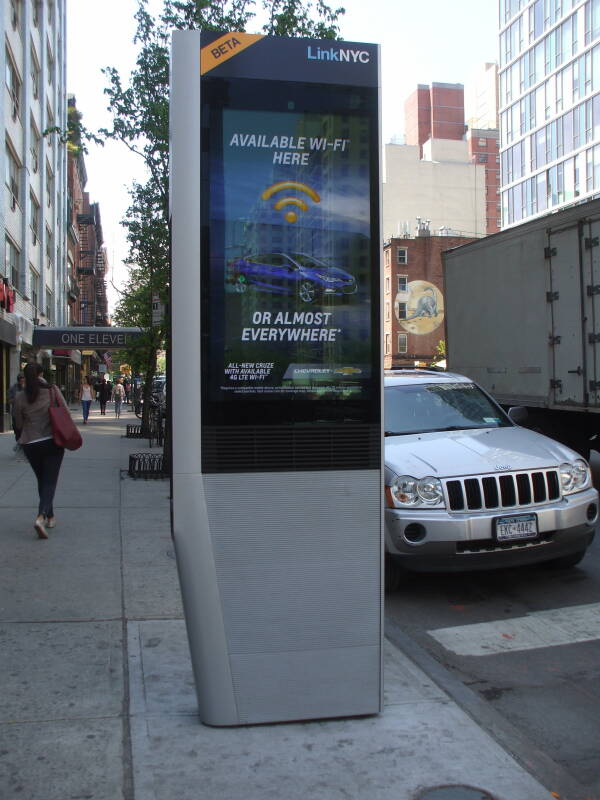
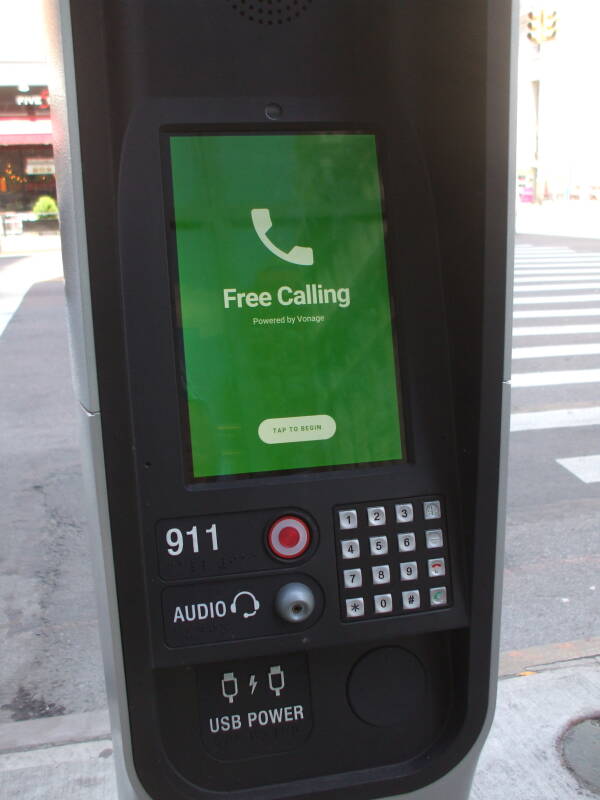
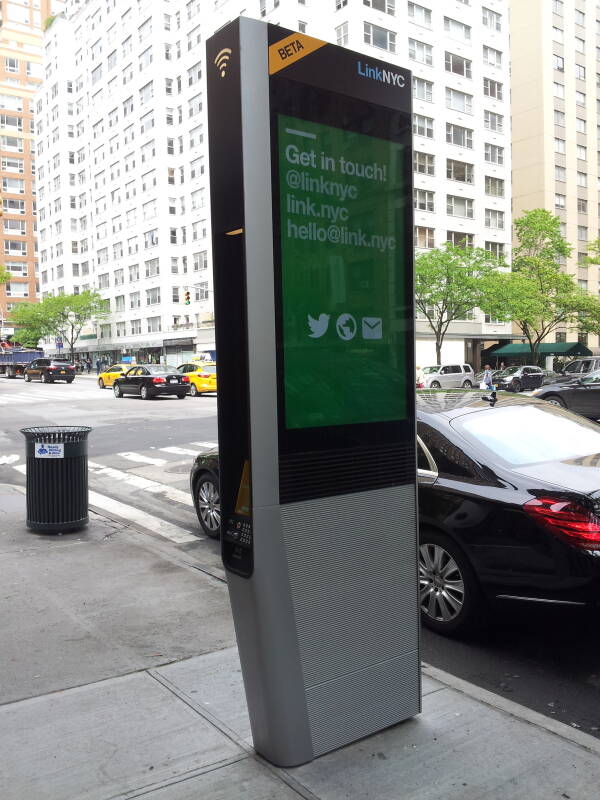
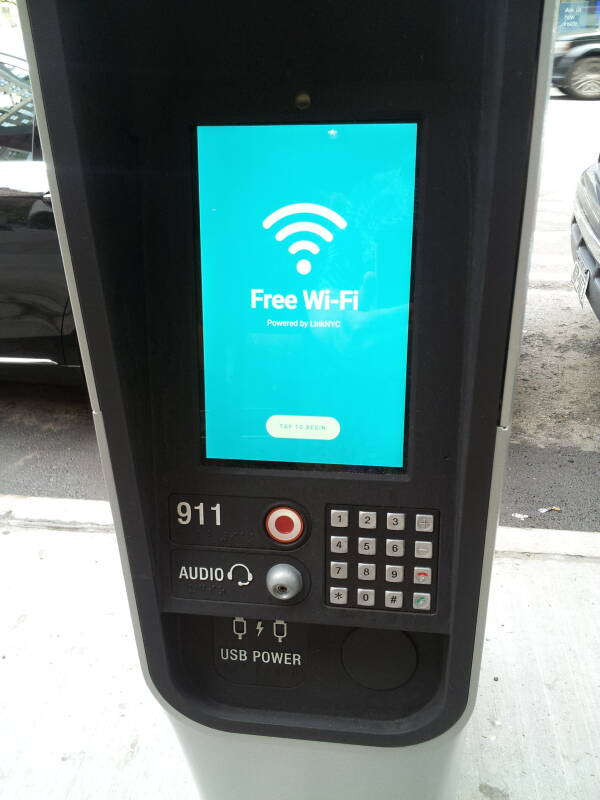
The last two pictures here are from the Upper East Side, happening Third Avenue around Eastern United States 70th Street.
U.S.A. Travel Outside Travel
Where Is a Pay-phone on Staten Island New York
Source: https://cromwell-intl.com/travel/usa/new-york-phone-booths/

Post a Comment for "Where Is a Pay-phone on Staten Island New York"