How Do You Know When to Shift a Ten Speed Semi
I of the three most important settings in photography is Shutter Speed, the other 2 being Aperture and ISO. Shutter speed is responsible for two particular things: changing the effulgence of your photograph and creating dramatic effects by either freezing action or blurring motion. In the following article, nosotros will explain everything you need to know about information technology in very unproblematic language.
Shutter speed exists because of the camera shutter – which is a curtain in front of the camera sensor that stays closed until the camera fires. When the camera fires, the shutter opens and fully exposes the camera sensor to the lite that has passed through your lens. Later on the sensor is done collecting the light, the shutter closes immediately, stopping the light from hitting the sensor. The push button that fires the camera is also called "shutter" or "shutter push," considering information technology triggers the shutter to open up and close.
What is Shutter Speed?
Shutter speed is the length of time the photographic camera shutter is open up, exposing calorie-free onto the camera sensor. Essentially, information technology's how long your camera spends taking a photograph. This has a few important effects on how your images will appear.
When you lot use a long shutter speed (as well known as a "slow" shutter speed), yous terminate up exposing your sensor for a pregnant period of time. The get-go large upshot of it is motion blur. If your shutter speed is long, moving subjects in your photograph volition appear blurred along the management of motion. This outcome is used quite often in advertisements of cars and motorbikes, where a sense of speed and move is communicated to the viewer past intentionally blurring the moving wheels.
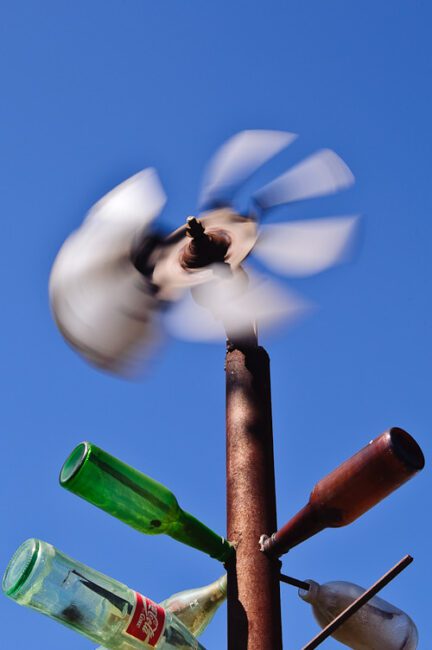
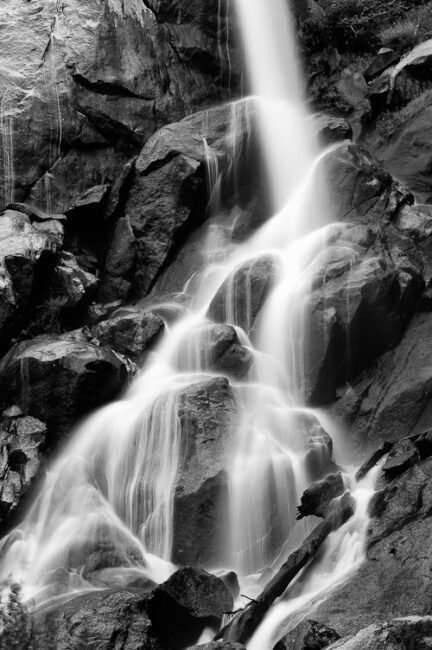
Ho-hum shutter speeds are also used to photograph the Galaxy or other objects at dark, or in dim environments with a tripod. Landscape photographers may intentionally use long shutter speeds to create a sense of motion on rivers and waterfalls while keeping everything else completely sharp.
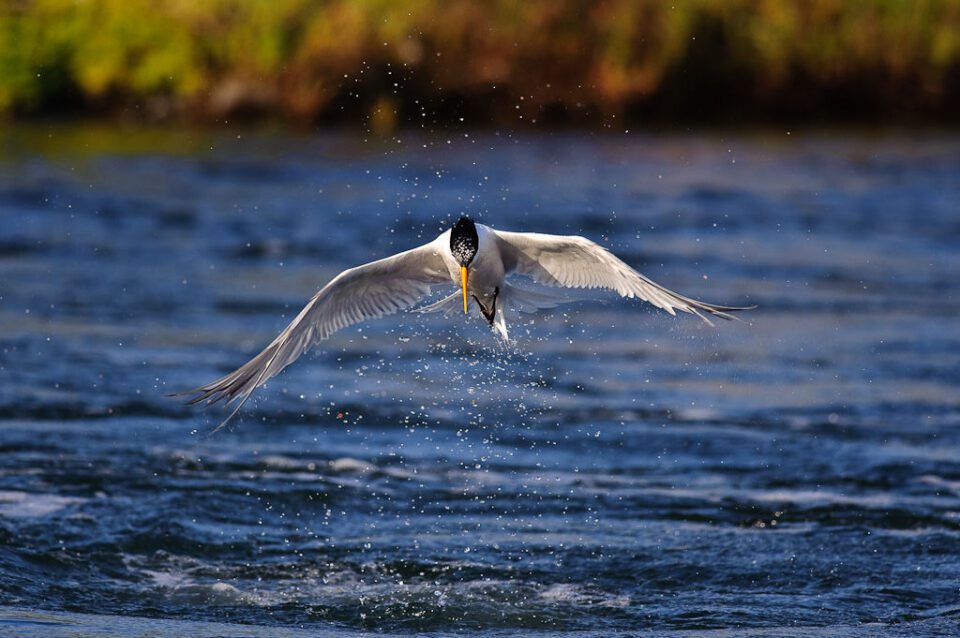
On the other hand, shutter speed can also be used to exercise just the opposite – freeze motion. If y'all apply an especially fast shutter speed, you can eliminate motion even from fast-moving objects, like birds in flying, or cars driving by. If y'all use a fast shutter speed while taking pictures of water, each droplet volition hang in the air completely sharp, which might non fifty-fifty exist visible to our own optics.
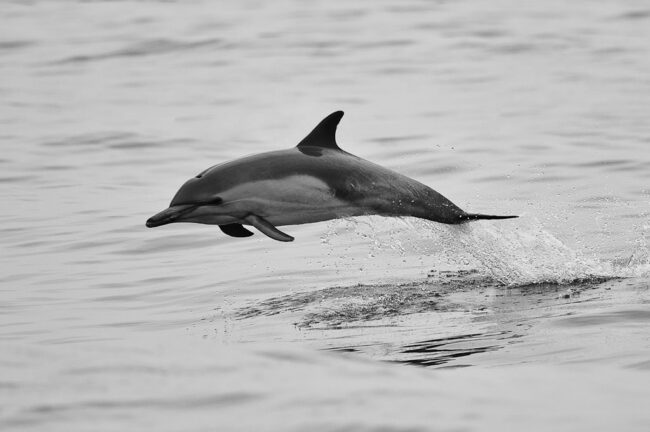
All of the to a higher place is achieved by simply decision-making the shutter speed. In summary, quick shutter speeds freeze action, while long ones create an event of move when you lot photo moving objects.
How Shutter Speed is Measured
Shutter speeds are typically measured in fractions of a second when they are nether a second. For example, 1/4 ways a quarter of a 2d, while one/250 means one-two-hundred-and-fiftieth of a second (or four milliseconds).
Near modern DSLRs and mirrorless cameras can handle shutter speeds of 1/4000th of a second at the fastest, while some can handle even quicker speeds of 1/8000th of a second and faster. On the other paw, the longest bachelor shutter speed on most DSLRs or mirrorless cameras is typically xxx seconds. You can utilize a longer shutter speed by using external remote triggers, if necessary.
Shutter Speed and Exposure
The other important issue of shutter speed is on exposure, which relates to the effulgence of an image. If you use a long shutter speed, your photographic camera sensor gathers a lot of low-cal, and the resulting photograph will exist quite bright. By using a quick shutter speed, your camera sensor is but exposed to a small-scale fraction of calorie-free, resulting in a darker photograph.
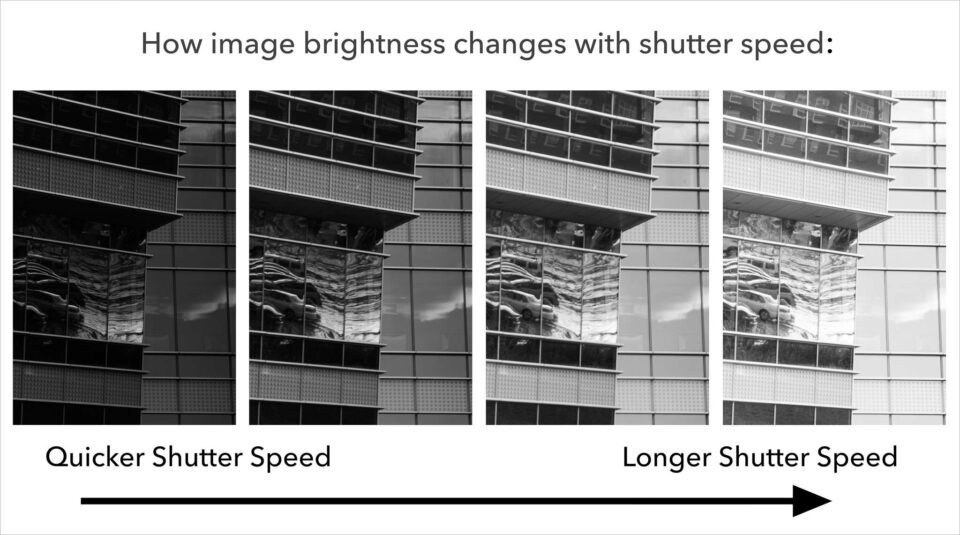
However, shutter speed is not the but variable that affects the brightness of an image. There are also Discontinuity and ISO, along with the actual brightness of the scene in forepart of you. So, you have some flexibility when yous're deciding on a shutter speed, simply you lot need to selection your other settings carefully.
Shutter speed can exist a vital tool to capture a photo of the proper brightness. On a sunny day, you may demand to use a fast shutter speed then that your photograph isn't overexposed. Or, if it is night out, a long shutter speed may be necessary to avert a photo that is likewise dark (which, in plough, could crave a tripod, due to motion blur from handholding the camera). For many people, this is the principal reason to adjust shutter speed: to make sure your photos are the proper brightness. Yet, movement blur concerns are also very important, and should not be overlooked.
Fast, Slow and Long Shutter Speeds
A fast shutter speed is typically whatever it takes to freeze activeness. If you are photographing birds, that may be ane/1000th 2nd or faster. Still, for general photography of slower-moving subjects, you might be able to take pictures at 1/200th second, ane/100th second, or fifty-fifty longer without introducing movement blur.
Long shutter speeds are typically to a higher place ane 2d – at which signal, yous volition demand to use a tripod to become precipitous images. Yous would use long shutter speeds for sure types of depression-calorie-free / night photography, or to capture movement intentionally. If anything in your scene is moving when you lot use long shutter speeds, it will appear very blurry.
In between, shutter speeds from 1/100th second to 1 second are withal considered relatively boring. You may not be able to handle them without introducing photographic camera shake from your hands, especially shut to the one-second marking.

Also, this strongly depends upon your lens. Some lenses, such as the Nikon lxx-200mm f/2.8, have specific epitome stabilization (as well known as "vibration reduction") technologies within the lens that can help photographers take pictures at very boring shutter speeds when manus-holding cameras, without introducing camera milkshake. Other lenses do not have vibration reduction, which means you need to use the reciprocal dominion instead to determine how long your shutter speed should exist without introducing blur from camera milk shake. Information technology is also important that y'all know how to hold a camera.
How to Gear up Shutter Speed
Virtually cameras handle shutter speeds automatically past default. When the camera is set to "Motorcar" manner, the shutter speed is selected by the photographic camera without your input (and then are aperture and ISO). Withal, you tin still set the shutter speed manually if necessary:
- By setting the photographic camera to "Shutter Priority" mode, you choose the shutter speed, and the photographic camera automatically selects the discontinuity.
- By setting the camera to "Manual" mode, you choose both shutter speed and aperture manually.
Within both of these modes, yous can choose to prepare ISO manually or automatically.
In most cases, we recommend letting the camera select the right shutter speed for yous. Still, picket to be certain that you aren't introducing also much movement mistiness in a photo (or freezing motility that yous want to exist blurred). I cover more of this in an commodity on photographic camera modes, but I tend to shoot in "Discontinuity Priority" mode 95% of the time, letting the camera calculate the shutter speed automatically.
How to Observe Shutter Speed
Practise yous know how to observe what your photographic camera shutter speed is set to? It is typically very easy to find it. On cameras that have a top console, the shutter speed is typically located on the top left corner, every bit circled:
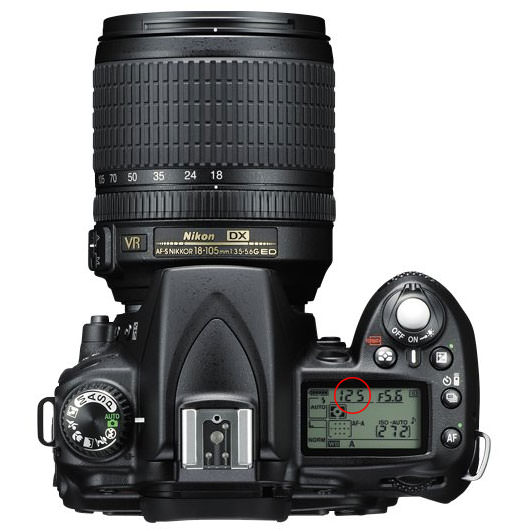
If your camera does not have a top LCD, like some entry-level DSLRs, you tin look through the viewfinder, where yous volition run across the shutter speed on the lesser-left side. And if your camera has neither a top LCD nor a viewfinder, like many mirrorless cameras, you tin can see your shutter speed simply past looking on the dorsum screen.
On most cameras, the shutter speed will not prove up directly every bit a fraction of a second – information technology volition typically be a regular number. When the shutter speed is longer than or equal to one 2d, you will come across something similar 1" or five" (with the quotation sign to betoken a full second).
If y'all all the same cannot find the shutter speed, ready your camera to "Aperture Priority" manner, and make sure that you have turned "AUTO ISO" off. So, get-go pointing around your photographic camera from dark to brilliant areas. The number that changes will be your shutter speed.
Below are some other related posts you lot might enjoy:
- What is Exposure?
- What is Shutter Daze?
- Agreement ISO, Shutter Speed and Aperture
- Seven Tips to Pick the Perfect Shutter Speed
We besides made a video explaining shutter speed if that'south how you lot adopt to learn things:
Shutter Speed FAQ
Below are some of the frequently asked questions related to shutter speed:
What is a Slow Shutter Speed?
A long shutter speed is typically around 1 second and longer. In comparison, a tedious shutter speed tin refer to a fraction of a second, such as 1/2 or i/4.
What is a Fast Shutter Speed?
A fast shutter speed is often referred to as the shutter speed that is fast plenty to freeze activity. Typically, photographers refer to small fractions of a 2nd, such as 1/250th of a 2nd or faster when talking about fast shutter speed.
How Exercise I Find My Shutter Speed?
Shutter speed is oft displayed on your camera's top or rear LCD equally a number or fraction. If you half-press the shutter release, then movement your photographic camera towards a brighter area, the number that changes is typically your shutter speed.
Which Shutter Speed is the Slowest?
Depending on your camera, the slowest shutter speed that is allowed to employ without using a remote shutter release is typically 30 seconds.
What is the Fastest Shutter Speed I can Utilise on My Camera?
That depends on the camera'due south capabilities. Virtually DSLR and mirrorless cameras can shoot every bit fast as 1/4000 of a 2nd using the mechanical shutter. Some of the more advanced cameras can shoot as fast equally i/8000 of a second with mechanical shutters, and even faster when using electronic shutters.
How is Shutter Speed Written?
Shutter speed is always written in seconds or a fraction of a 2d. For case, a i-second shutter speed is typically displayed as a unmarried number with a quote sign or a letter "southward" at the end of it, such as 1″ or 1s. Whereas a fraction of a second such equally 1/250 is typically displayed as 1/250 or simply 250 on near cameras.
What is the All-time Shutter Speed?
There is no such matter, as it really depends on what you are trying to achieve.
How Practice I Change Shutter Speed on My Phone?
While some smartphones allow changing shutter speed using the built-in telephone app, most crave installing a third-party photographic camera app to allow changing the shutter speed. If you employ an iPhone, try out some apps similar Photographic camera+.
And if y'all want to continue learning from our Photography Basics Guide, below is our Tabular array of Contents.
Source: https://photographylife.com/what-is-shutter-speed-in-photography

Post a Comment for "How Do You Know When to Shift a Ten Speed Semi"